


Investment Perspective
A company built around the cost of understanding.
PITANT is building the data foundation that lets existing plants modernize in steps they can afford, operate and sustain.
See the work on record
When the readings stop, the line should break.
Twelve synthetic pressure readings went into one of PITANT’s software checks. With a two-second gap threshold, the software emitted separate drawing instructions on either side of a twelve-second interruption. All twelve measured points remained in the output.
Read More
The opportunity
Who can afford a better answer?
A plant may have functioning machinery and useful signals but still struggle to identify changes before a fault occurs. Finding the cause often requires specialist help. It may involve connecting systems installed years apart. Teams might need to learn and maintain new tools. This process can be costly and time-consuming.
In many existing plants, especially where capital and specialist support are limited, a full replacement is a high price to pay for basic visibility. We want to make a first dependable answer easier to reach for these teams, including operators in developing economies. With that evidence, the people running the plant can decide which improvement is worth paying for next.
Where we start
Start where the evidence can change a decision.
View MoreA small company can closely address a specific problem with the equipment operators. The initial task should have a clear scope. It must support a decision. Finally, it should be handed over for the plant’s use.
Establish a baseline
Agree on one decision the plant team needs to make and check which existing signals can support it.
Make the record usable
Capture it with a known unit, time and quality. Deliver it where the team already makes decisions.
Prove the next step
Review the result with the people using it. Use what they learn to decide what is worth connecting next.
What compounds
Build once. Carry the learning forward.
Read MoreInstrumentation gets a signal out of the physical process. Engineering makes it dependable across the connections it has to travel. Software preserves the context that lets someone interpret it later. Designing these together reduces the amount of work a plant has to repeat with each new connection.
Over time, the capabilities worth building are the ones that transfer. That includes documented interfaces, repeatable checks and reliable ways for people to retrieve their own data. We prefer open standards where practical and make exit paths part of the design. The plant keeps a useful foundation as its needs change.
The founders
Engineering and commercial judgment at the same table.
Read MoreAli Khademolhosseini and M. Hossein Khademolhosseini founded PITANT as father and son. Ali builds the company and its commercial relationships. Hossein brings technical architecture and product engineering to the choices that have to work on site.
Together they can ask whether an approach will work with the equipment, staff and budget a customer actually has. For a small team, keeping those questions together helps make the scope and the trade-offs clear from the start.
Responsible growth
Grow by making the work last.
Read MoreResponsible growth begins with choices we can make now. Keep safe and serviceable equipment working where it makes engineering sense. Set expectations a small team can support. Give customers records and documentation they can use for years.
We want relationships that can deepen as the plant learns where better data makes a difference. That calls for patient company building, clear evidence and a willingness to measure the effect of decisions on people and resources.
Investor FAQ
Scroll for more questions
What is PITANT?
PITANT UG (haftungsbeschränkt) is an industrial technology company based in Erlangen, Germany. We develop instrumentation and software for customers who need dependable process measurements and practical ways to use them. Our first product is the R24 paperless recorder.
What is the R24?
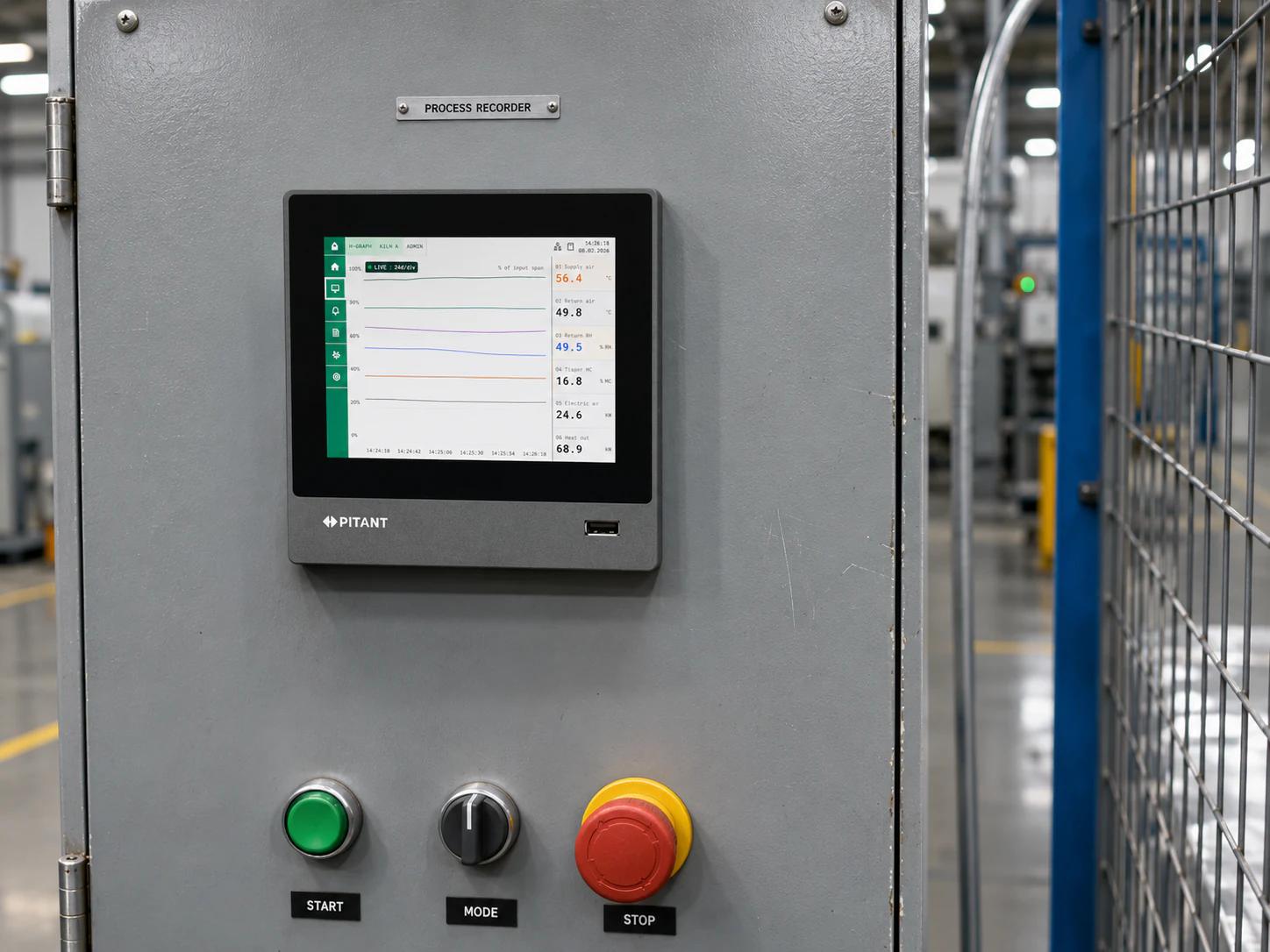
The R24 is PITANT’s first industrial paperless recorder. It acquires measurement signals, displays process information locally and stores recordings for later review and integration. Initial applications include thermal process equipment, test benches, climate chambers and industrial monitoring.
Explore the R24 paperless recorderWhat is the investment thesis?
The R24 gives PITANT a defined entry product and a route into industrial customer relationships. Successful installations could lead to repeat device orders, use across more machines and demand for related software and services. The investment case depends on reliable products, accepted installations, viable economics and repeat purchases. Broader software revenue still needs to be validated.
Who are your initial customers?
Our initial focus is machine manufacturers, system integrators and industrial operators with a concrete recording requirement. In Germany and the wider German-speaking market, priority applications include thermal equipment, test benches and climate chambers. A recorder accepted into a machine design may be ordered again for subsequent builds.
How will PITANT make money?
The initial revenue model centres on sales of the R24 and associated configurations. Commissioning, training and application engineering may provide additional revenue. Software licensing, maintenance and advanced applications are potential revenue streams, depending on the final offer and customer willingness to pay.
What problem are you solving?
Industrial teams need to turn machine measurements into useful information when they investigate a fault, compare production runs or document a process. We bring recording, local visualization and data access closer together to reduce the effort spent configuring equipment, moving files and reconstructing what happened.
Who is behind the company?
Ali Khademolhosseini and Mohammad Hossein Khademolhosseini founded PITANT. Mohammad brings more than 25 years of experience in electronics, embedded development and industrial instrumentation. He leads product architecture, hardware, firmware and technical quality. Ali leads business development, financing, commercial strategy and company building.
Why develop hardware and software together?
The recorder captures data at the machine. Companion software helps people configure devices, inspect recordings and use measurements in their engineering work. Designing both together lets us improve the connection between measurement and analysis. Each software product needs a clear customer use and a commercial model that can sustain development and support.
What is R Series Studio?
R Series Studio is the companion software environment being developed around the recorder family. The first priority is device configuration and working with recorded data. Managing multiple devices, organizing measurements by equipment, building dashboards and performing engineering calculations are possible later capabilities. Their scope and packaging are still being evaluated.
What comes after the R24?
Potential extensions include larger recorders, remote input and output modules, industrial interfaces and software for historical data, analysis and equipment monitoring. We plan to sequence that work around customer demand and reuse of existing engineering. Each additional product line needs its own definition, budget and release decision.
How will PITANT acquire customers?
We plan to combine direct technical selling with selected distributors and integration partners. Early conversations will establish the application, required configuration and purchasing process before an evaluation or order. We will assess channels through qualified opportunities, evaluation results, accepted orders and repeat purchases.
Why would a customer choose PITANT?
Our proposition combines practical recording functions, straightforward integration, usable software and direct technical access to the manufacturer. Customer evaluations give us a way to demonstrate the value in measurement performance, configuration effort, compatibility, data access, support and total deployment cost.
How large is the opportunity?
Our initial commercial model focuses on reachable manufacturers and projects in thermal equipment, test benches, climate chambers and related recording applications. The investment model will connect target accounts, expected equipment volumes and attainable net selling prices to revenue and cash requirements. Additional product markets will be assessed separately.
Can the business generate recurring revenue?
Potential sources include software maintenance, subscriptions for suitable products and support agreements. Machine manufacturers and integrators may also place repeat hardware orders as they build more equipment or deliver more projects. Software packaging and licensing are still being evaluated.
How will you manage manufacturing and working capital?
We plan to use external production services while retaining responsibility for product definition, release, quality requirements and customer support. The financing plan must account for supplier deposits, component lead times, production batches, inventory and customer payment terms. We intend to match production commitments to credible demand and available liquidity.
How can PITANT scale beyond the founders?
Our plan centres on documented engineering, repeatable testing, maintainable software and support processes that others can operate. Recruitment will focus on the constraints that most directly limit reliable delivery and sales. The operating plan will identify which responsibilities stay with PITANT and which go to qualified suppliers or specialists.
What are the main business risks?
Principal risks include development and release delays, slower customer adoption, inconsistent manufacturing, cash requirements and dependence on a small team. Software maintenance and support create ongoing obligations. We plan to manage these risks through focused scope, documented acceptance criteria, staged production commitments and cash planning that includes a downside scenario.
What kind of investors are you looking for?
We welcome discussions with individuals, business angels, family offices, funds and strategic industrial partners whose investment horizon accommodates industrial development and customer evaluation. Relevant support could include access to customers or experience in instrumentation, manufacturing, commercial hiring or product qualification.
What will the investment fund?
The intended priorities are remaining R24 qualification and release work, initial production and delivery, software needed by customers, and sales and support for early installations. The budget will also cover working capital and contingency. The allocation will reflect the release status at closing.
What milestones should investors expect?
The investment plan will track a documented R24 release, repeatable production quality and delivery, customer installations that meet agreed acceptance criteria, paid follow-on orders and evidence of software adoption. Each milestone will have an owner, budget and timing in the financing plan.
How could investors earn a return and what could they lose?
A potential return could come from an acquisition, a permitted share sale or distributions if the company’s financial position and agreements allow them. Investors should be prepared for a long holding period, limited opportunities to sell and the possibility of losing their entire investment. Future financing may dilute ownership.
What information will be needed before investing?
Diligence should cover corporate records and capitalization, accounts and cash position, the operating plan, product status and test evidence, commercial records, material contracts, and intellectual property and licensing. It should also cover founder commitments, supplier dependencies and the assumptions behind pricing and margins. Sensitive materials can be reviewed under suitable confidentiality arrangements.
How can I start an investment conversation?
Email Ali Khademolhosseini with a brief introduction, your investment focus, indicative range and expected decision process. Strategic partners can also describe what they could contribute. The first step is an introductory discussion, followed by relevant company information and an agreed diligence process if there is a fit.
Email Ali KhademolhosseiniLet’s talk about building PITANT.
We welcome conversations with investors interested in patient industrial company building, dependable technology and wider access to useful data.
